About Me
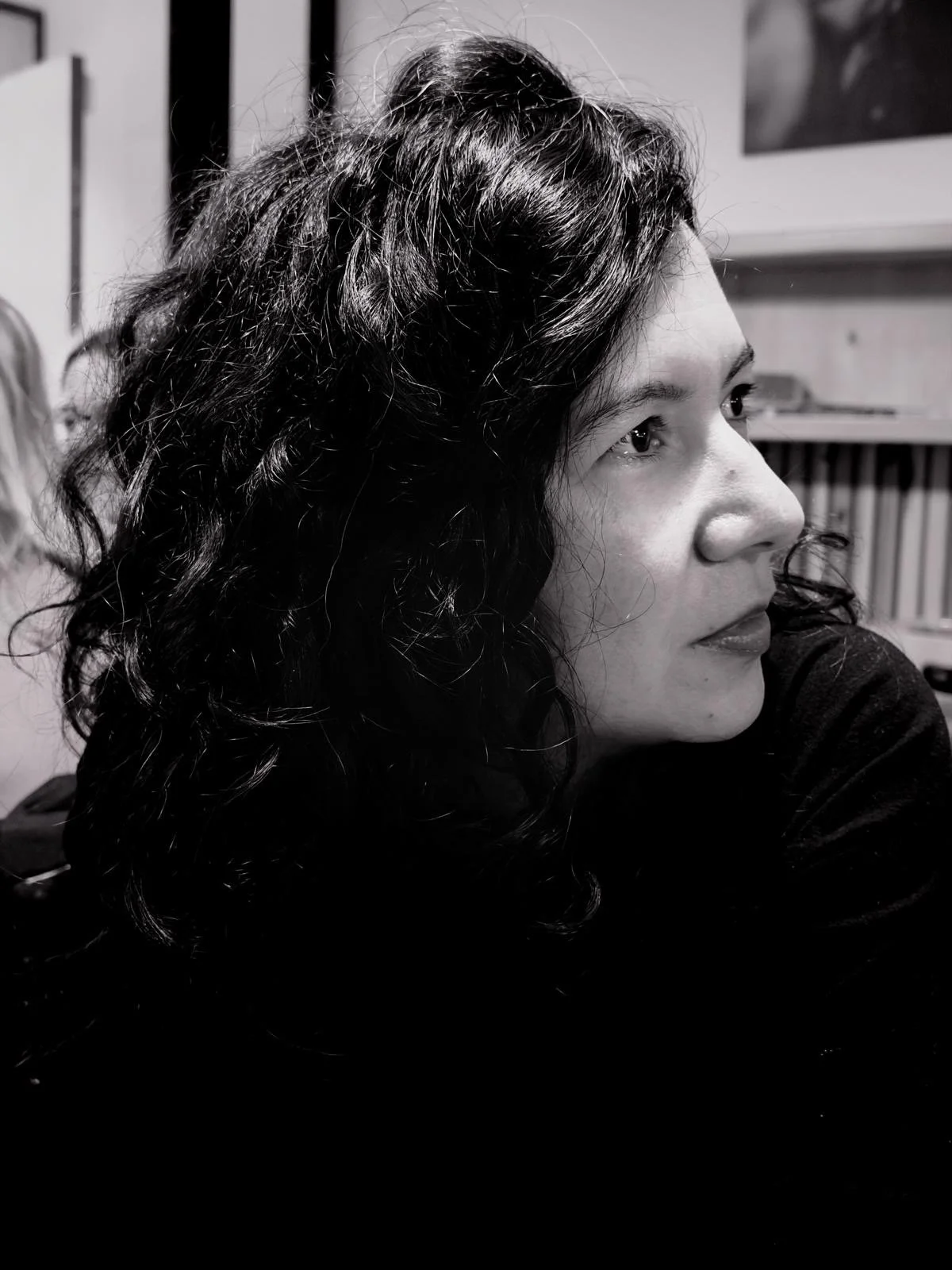
I work to transform how we think about, implement, and communicate security in Latin America, with a growing presence in Europe, through national, regional, and transatlantic initiatives. I'm Colombian and have lived in Spain for several years. I have over 15 years of experience leading and managing portfolios and projects in peacebuilding and security across the Colombian government, international foundations, multilateral organizations, and civil society. I'm currently focused on advancing transformative approaches to security, with particular emphasis on narrative change, women's civilian leadership, and the relationship between security and democracy—the central themes of this page.
I studied Government and International Relations at Universidad Externado de Colombia, completed my final year in Washington D.C. (Washington Semester Program at American University), and years later earned a master's degree in Development Studies at the International Institute of Social Studies (Erasmus University Rotterdam). Both experiences abroad confronted me with asymmetries that remain present: security policies framed as "cooperation" between countries that are profoundly unequal—such as the war on drugs—and the condescension with which Latin America is viewed from the Global North, constantly interpreted and treated as an object of study, rarely as a producer of knowledge.
I began my professional career in the Colombian government, first at the Ministry of Culture coordinating the National Plan for Culture and Coexistence, then at the High Council for Reintegration, where I focused on South-South technical cooperation and youth violence prevention. After my master's, I worked across different sectors, both in and outside Colombia—multilateral organizations, civil society, private foundations, international cooperation—advising, coordinating, and leading projects on topics including disarmament, demobilization and reintegration (DDR), conflict prevention, artistic approaches to memory with conflict victims, and local governance, among others.
That diversity of experiences allowed me to understand firsthand the different institutional logics and what real possibilities exist for driving change initiatives from within each of these spaces. It also made visible a pattern that repeated across all of them: men predominantly occupied leadership and decision-making positions, concentrating visibility, authority, and opportunities for influence, while women, regardless of our experience or capacity, were often relegated to secondary roles.
I later worked for nearly six years at Open Society Foundations on the drug policy portfolio for Latin America, and it was during that period that I made two important decisions outside the institutional realm, as a citizen. The first was to start writing—in 2018, I launched my blog at La Silla Vacía and became more active on social media to share reflections, initially on peacebuilding and later on drug policy, based on something I learned during those years: despite abundant evidence of the ineffectiveness of the "war on drugs," its main success has been narrative. That presence in the public conversation eventually led me to write for El País and participate in various events, dialogues, and podcasts both within and outside the region.
The second decision came from observing, once again, the underrepresentation of women in security leadership spaces and in the public conversation about security. I decided to do something with that exhaustion and frustration: I began driving local initiatives to amplify and make visible the voices and experiences of women in security. That's what initiated my more formal journey toward advancing transformative approaches to security.
I'm currently not part of any institution in a formal capacity. This decision reflects a way of working I've been building: I enjoy creating, designing projects, exploring ideas, and putting them into practice without the limitations that institutional structures sometimes impose. That independence also allows me to collaborate with different organizations and people, and address multiple issues and perspectives. Because challenging the security field cannot be done from a single place or with a single strategy.